RankquantRQ
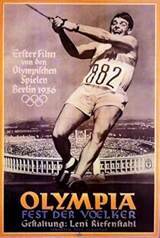
Olympia Part One: Festival of the Nations (1938) poster
1938
global pct
95.1

Film · 1938 · Films · 1930s

Olympia Part One: Festival of the Nations

Scored from 26 calibrated IMDb reviewers, each re-centered on their own rating baseline before the title is ranked. Cohort: Films · 1930s (25 peers).

95.1%
Global percentile
vs. all 52,376 ranked titles
87.5%
In-cohort percentile
Films · 1930s · 25 titles
92.7%
AI-adjusted percentile
26 calibrated reviewers, thin samples pulled to the mean

Summary

This is the first half of Leni Riefenstahl's two-part record of the 1936 Summer Olympics in Berlin, made with funding and backing from the Nazi government. A prologue links the ruins of ancient Olympia and classical sculpture to modern athletes, followed by the inaugural torch relay from Greece to the Olympiastadion and the opening ceremony. The bulk of the film is track and field — sprints, distance races, throws, jumps and the marathon — including Jesse Owens's four gold medals. Riefenstahl's crews used tracking rails, pits dug beside the field and slow-motion photography, methods that shaped how sport was filmed afterwards.

Released in 1938, Olympia Part One: Festival of the Nations is a documentary and sport film. It was made in Germany, in German. The runtime is 118 minutes.

Only 26 of its IMDb reviewers rate with enough spread for a personal baseline to be measured, so the calibrated figure rests on a thin sample; a broader pool of 27 reviewers with at least two reviews feeds the raw-average track. A second review pool sits behind it as well: 33 Rotten Tomatoes reviewers clear the same calibration test, and Rankquant scores them separately. The cohort it is ranked inside is 1930s films — 25 of them.

How the score was built

We compare the reviewers of this title against every other title those same people reviewed. Each review is scored relative to the reviewer's own baseline — a 7/10 from a hard grader sits well above their average, while a 7/10 from a generous grader sits below theirs. Every reviewer then counts the same, so the result is a calibrated consensus rather than a raw average.

Global percentile
Where Olympia Part One: Festival of the Nations lands against every title we rank.
In-cohort percentile
The same comparison narrowed to its cohort — titles of the same format released in the same decade. A 1970s film is judged against 1970s films, not against last year's streaming series. Ranked against Films · 1930s (25 titles).
AI-adjusted percentile
The same reviewer-normalized score, corrected for how much confidence the sample supports: thin samples are pulled toward the corpus average. Each title keeps the share n / (n + 53) of its measured distance from the average, where n is its calibrated-reviewer count, and the result is ranked on the same scale as the global percentile.53 is the median sample size across everything we rank. Here n is 26.

Cohort: Films · 1930s

Closest peers in the same cohort

See all 52,376