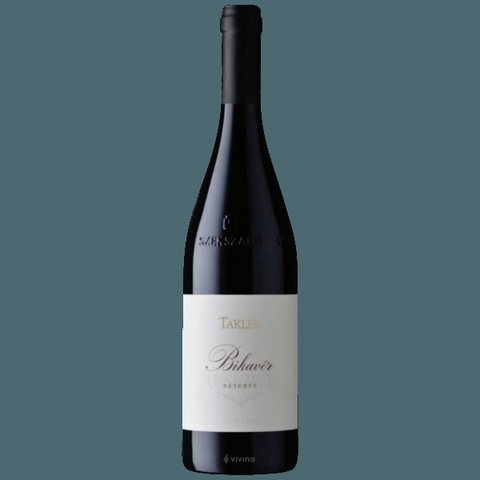
Red · Szekszárd · Hungary
Takler Reserve Bikavér
Scored from 263 calibrated Vivino reviewers. Cohort: Red · Hungary (17 wines).
Find this wine: view on Vivino · compare prices on Wine-Searcher
Is Reserve Bikavér a good wine?
What reviewers say
“Very good Hungarian blend, Kékfrankos, Merlot, Cabernet Sauvignon, and Kadarka, a medium ruby-red color with garnet reflexes. Nose: medium intense, mild, dark fruit, red fruit, spices, vanilla, tea leaves, leather. In the mouth: ripe red fruit, fleshy cherry, red currants, blackcurrant, blueberry, plum, green herbs, dried herbs, some of the oak wood, soft spices, pepper, balsamic notes. Wine medium body, soft, juicy, fruity, with a nice silky texture, and mild acidity.”
From a top-rated Vivino review for this bottle.
Summary
Takler Reserve Bikavér is a red from Szekszárd, Hungary, blended from Cabernet Franc and Merlot.
The calibrated figure is built from 263 of its Vivino reviewers. A broader pool of 270 reviewers with two or more ratings feeds the raw-average track instead. 16 other reds from Hungary form the cohort it is ranked inside.
- Cohort
- Red · Hungary · 17 wines
- Calibrated reviewers
- none yet
Cohort: Red · Hungary