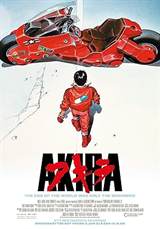
Film · 1988 · Films · 1980s
Akira
Scored from 485 calibrated IMDb reviewers. Cohort: Films · 1980s (3,141 peers).
Summary
In a dystopian Neo-Tokyo recovering from World War III, a street gang member named Kaneda witnesses his friend Tetsuo's near-fatal motorcycle accident. Military authorities capture Tetsuo for mysterious scientific experiments, during which he begins manifesting devastating psychokinetic powers. As Tetsuo's abilities spiral out of control, Kaneda and his allies become entangled in a dangerous conspiracy surrounding a powerful force known as Akira.
Released in 1988, Akira is a science fiction, action and thriller film. Its certificate is R. Its country of origin is listed as Japan. Mitsuo Iwata, Nozomu Sasaki and Taro Ishida head the billed cast. Katsuhiro Ôtomo directed it. It plays in Japanese. It runs 2h 4m.
The cohort it is ranked inside is 1980s films — 3,141 of them. Rotten Tomatoes carries a separate audience for the same title, 7,677 of whom clear the calibration test. The calibrated figure is built from 485 of its IMDb reviewers. A broader pool of 503 reviewers with two or more reviews feeds the raw-average track instead.
Is Akira (1988) worth watching?
- Cohort
- Films · 1980s · 3,141 titles
- Calibrated reviewers
- 485
Cohort: Films · 1980s