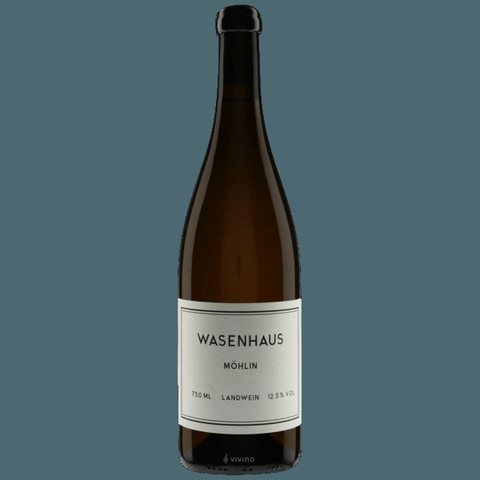
White · Baden · Germany
Wasenhaus Möhlin
Scored from 84 calibrated Vivino reviewers. Cohort: White · Germany (1,789 wines).
Find this wine: view on Vivino · compare prices on Wine-Searcher
Is Möhlin a good wine?
Tasting profile
A concentrated, mineral-driven Weissburgunder showing yellow apple, pear, citrus, chalk and a saline, stony finish, with hints of black pepper on a related Pinot Noir bottling. Reviewers describe it as straight and precise rather than floral, balancing power with finesse and gaining depth after time in the glass.
Synthesized from 84Vivino reviewers' tasting notes for this bottle.
What reviewers say
“HOLY SHIT! This is amazing stuff, so great and rich and calm and pleasant and electric and enticing”
From a top-rated Vivino review for this bottle.
Summary
Wasenhaus Möhlin is a German white from Baden. The grape is Weissburgunder.
The calibrated figure is built from 84 of its Vivino reviewers. A broader pool of 84 reviewers with two or more ratings feeds the raw-average track instead. 1,788 other whites from Germany form the cohort it is ranked inside.
- Cohort
- White · Germany · 1,789 wines
- Calibrated reviewers
- none yet
Cohort: White · Germany