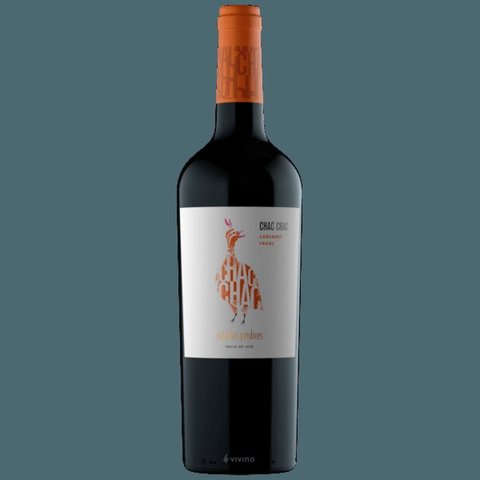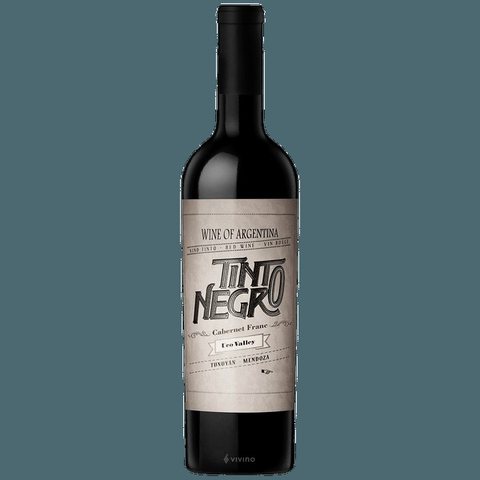
Red · Uco Valley · Argentina
Tinto Negro (TintoNegro) Cabernet Franc
Scored from 614 calibrated Vivino reviewers. Cohort: Red · Argentina (482 wines).
Find this wine: view on Vivino · compare prices on Wine-Searcher
Is Cabernet Franc a good wine?
What reviewers say
“3.8 💫 Los Cabernet Franc no tienen pierde, de color violeta y en nariz aromas de frutos negro a mora y cerezas con flores pero en boca despertó una sorpresa lleno de estructura, balance en taninos siendo un vino joven con notas de chocolate y terroso.”
From a top-rated Vivino review for this bottle.
Summary
Intense aromas of herbs and flowers, jam flavor of red fruits, rich texture and finish with marked mineral tones.
Tinto Negro (TintoNegro) Cabernet Franc is an Argentine red from Uco Valley. The cheapest 750 ml listing found for it is $21.99, which puts the bottle in the $15–30 band.
614 Vivino reviewers are calibrated for this bottle, and those are the ones the calibrated score reads; a separate, broader pool of 631 reviewers with at least two ratings each feeds the raw-average track. Its in-cohort standing is measured against 481 other reds from Argentina, not against the corpus as a whole.
- Cohort
- Red · Argentina · 482 wines
- Calibrated reviewers
- none yet
Cohort: Red · Argentina