White · Salento · Italie
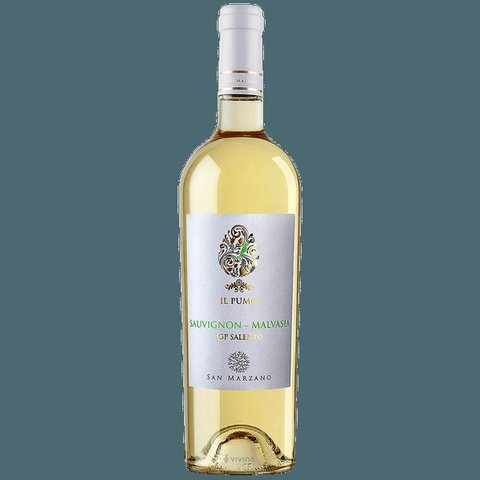
San Marzano Il Pumo Sauvignon - Malvasia
Scored from 1,932 calibrated Vivino reviewers. Cohort: White · Italie (438 wines).
Find this wine: view on Vivino · compare prices on Wine-Searcher
Is Il Pumo Sauvignon - Malvasia a good wine?
What reviewers say
“On the nose: citrus lemon mist with a mix of peach and pineapple. On the palate: lemon peel (slight bitterness similar to petrol or grapefruit), muscat forward, a hint of peach and unripened pineapple. The grapefruit/petrol lingers on a medium length finish.”
From a top-rated Vivino review for this bottle.
Summary
Pale yellow color with greenish reflections; floral scent due to the broom and fruity due to citrus and exotic fruits. Wine by good acidity, fresh and mineral.
San Marzano Il Pumo Sauvignon - Malvasia is a white from Salento, Italy, blended from Malvasia and Sauvignon Blanc.
437 other whites from Italy form the cohort it is ranked inside. The calibrated figure is built from 1,932 of its Vivino reviewers. A broader pool of 1,966 reviewers with two or more ratings feeds the raw-average track instead.
- Cohort
- White · Italie · 438 wines
- Calibrated reviewers
- none yet
Cohort: White · Italie