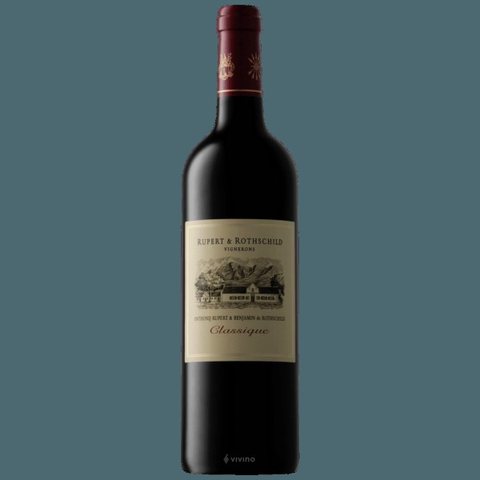
Red · Western Cape · South Africa
Rupert & Rothschild Classique
Scored from 5,598 calibrated Vivino reviewers. Cohort: Red · South Africa (132 wines).
Find this wine: view on Vivino · compare prices on Wine-Searcher
Is Classique a good wine?
What reviewers say
“Si presenta alla visiva con un rosso rubino carico e impenetrabile con una leggera sfumatura granata. All’olfattiva immediatamente frutta rossa matura , prugna , cassis , ciliegia e qualche sfumatura di legno dovuto all’invecchiamento in rovere .”
From a top-rated Vivino review for this bottle.
Summary
Deep dark colour with ripe fruits, toned by toasted oak.
Rupert & Rothschild Classique is a South African red made from Cabernet Sauvignon. It sits in the $15–30 band, on a lowest observed 750 ml price of $28.44. The vineyard region is Western Cape, South Africa.
Its in-cohort standing is measured against 131 other reds from South Africa, not against the corpus as a whole. 5,598 Vivino reviewers are calibrated for this bottle, and those are the ones the calibrated score reads; a separate, broader pool of 5,839 reviewers with at least two ratings each feeds the raw-average track.
- Cohort
- Red · South Africa · 132 wines
- Calibrated reviewers
- none yet