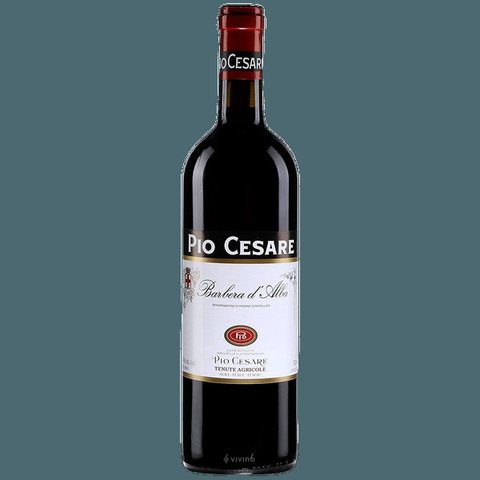
Red · Barbera d'Alba · Italy
Pio Cesare Barbera d'Alba
Scored from 5,389 calibrated Vivino reviewers. Cohort: Red · Italy (947 wines).
Find this wine: view on Vivino · compare prices on Wine-Searcher
Is Barbera d'Alba a good wine?
What reviewers say
“Virkelig lækker vin, der i grove træk overrasker med letheden og tilgængeligheden. Havde egentlig regnet med en mere kraftig vin, da jeg tidligere har begivet mig ud i smagning af andre Barbera’er, der har givet mig lyst til at fortynde dem. Meget positivt overrasket.”
From a top-rated Vivino review for this bottle.
Summary
Full structure, plummy and complex flavor, with spicy and ripe fruit, blackberry aroma and a hint of toasted tobacco.
Pio Cesare Barbera d'Alba is an Italian red from Barbera d'Alba. At $28.99 for the lowest 750 ml listing, it belongs to the $15–30 band.
5,389 Vivino reviewers are calibrated for this bottle, and those are the ones the calibrated score reads; a separate, broader pool of 5,498 reviewers with at least two ratings each feeds the raw-average track. 946 other reds from Italy form the cohort it is ranked inside.
- Cohort
- Red · Italy · 947 wines
- Calibrated reviewers
- none yet