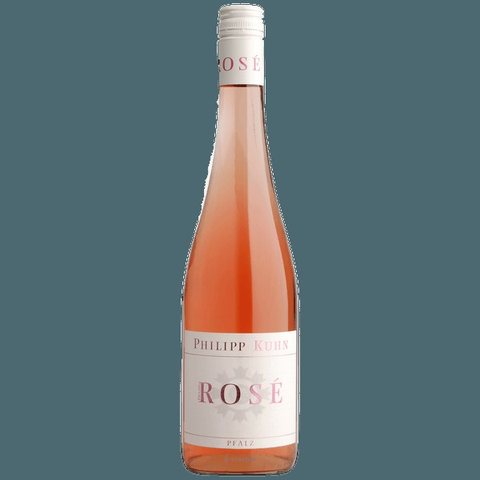
Rosé · Pfalz · Germany
Philipp Kuhn Philipps Rosé
Scored from 176 calibrated Vivino reviewers. Cohort: Rosé · Germany (63 wines).
Find this wine: view on Vivino · compare prices on Wine-Searcher
Is Philipps Rosé a good wine?
What reviewers say
“„Bisquit with some tangerines and a light herbal note in the background. Clear and delicately juicy; stimulating fruit, apple, pear with a hint of orangeade; solid body not too heavy-looking; lively and refreshing…“ „Bisquit mit etwas Mandarinen und leichter Kräuternote im Hintergrund. Klar und feinsaftig; animierende Frucht, Apfel, Birne mit einem Hauch nach Orangeade; fester Körper nicht allzu schwer wirkend; lebendig und erfrischend…..“”
From a top-rated Vivino review for this bottle.
Summary
From Pfalz in Germany, Philipp Kuhn Philipps Rosé is a rosé. It blends St Laurent, Cabernet Sauvignon, Blaufrankisch, Spatburgunder and Merlot.
Its in-cohort standing is measured against 62 other rosés from Germany, not against the corpus as a whole. 176 Vivino reviewers are calibrated for this bottle, and those are the ones the calibrated score reads; a separate, broader pool of 179 reviewers with at least two ratings each feeds the raw-average track.
- Cohort
- Rosé · Germany · 63 wines
- Calibrated reviewers
- none yet
Cohort: Rosé · Germany