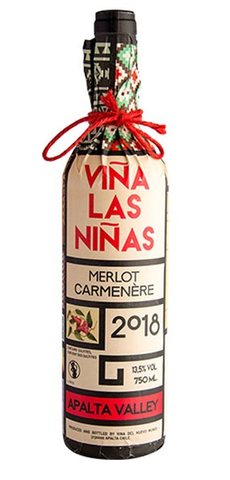
Red · Colchagua Valley · Chile
Las Niñas Mapuche Carménère - Syrah
Scored from 42 calibrated Vivino reviewers. Cohort: Red · Chile (444 wines).
Find this wine: view on Vivino · compare prices on Wine-Searcher
Is Mapuche Carménère - Syrah a good wine?
What reviewers say
“PT- Aromas de fruta negra misturada, um bocado fechado no início. Cor grana, cerrada, ton de violeta nos bordos. Taninos, madeira, intenso no início, com pouco prolongamento. Agradável e harmonioso. DE - Aromen von gemischten dunklen Früchten, anfangs etwas verschlossen. Tiefes Granatrot mit violetten Reflexen am Rand. Tannine und Holznoten, anfangs intensiv, mit kurzer Nachhallzeit. Angenehm und harmonisch.”
From a top-rated Vivino review for this bottle.
Summary
Las Niñas Mapuche Carménère - Syrah is a red from Colchagua Valley, Chile. It blends Carmenere and Shiraz Syrah.
443 other reds from Chile form the cohort it is ranked inside. 42 Vivino reviewers are calibrated for this bottle, and those are the ones the calibrated score reads; a separate, broader pool of 44 reviewers with at least two ratings each feeds the raw-average track.
- Cohort
- Red · Chile · 444 wines
- Calibrated reviewers
- none yet