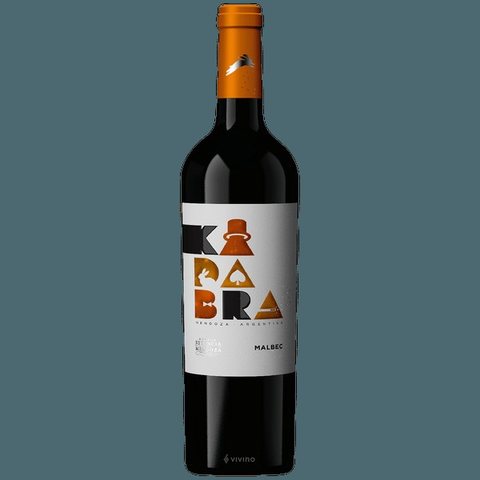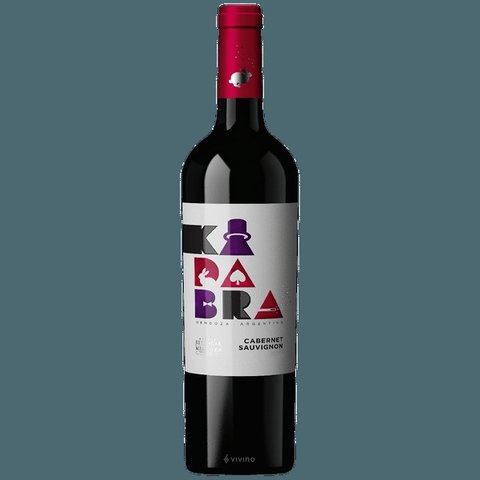
Red · Mendoza · Argentina
Kadabra Cabernet Sauvignon
Scored from 245 calibrated Vivino reviewers. Cohort: Red · Argentina (482 wines).
Find this wine: view on Vivino · compare prices on Wine-Searcher
Is Cabernet Sauvignon a good wine?
What reviewers say
“The tannins on this wine are outrageous. I love the boldness and slightly dry flavor. It has a long finish and powerful cherry and plum flavor. It’s a quality wine that packs a punch but can be enjoyed alone because of its complex flavor and rich tannins. I’d highly recommend it, not only because it’s easy to drink but because it’s under $15. It’s a great value for what you get and I’d enjoy this again in a heartbeat. 5 stars.”
From a top-rated Vivino review for this bottle.
Summary
Kadabra Cabernet Sauvignon is an Argentine red from Mendoza. It sits in the $15–30 band, on a lowest observed 750 ml price of $15.00.
245 Vivino reviewers are calibrated for this bottle, and those are the ones the calibrated score reads; a separate, broader pool of 254 reviewers with at least two ratings each feeds the raw-average track. The cohort it is ranked inside holds 482 Argentine reds.
- Cohort
- Red · Argentina · 482 wines
- Calibrated reviewers
- none yet