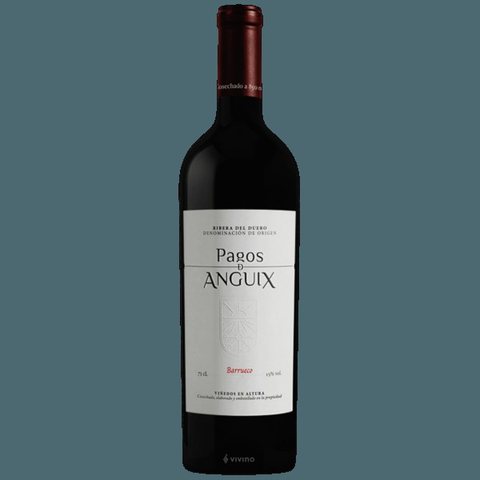
Red · Ribera del Duero · Espagne
Juvé & Camps Pagos de Anguix Barrueco
Scored from 221 calibrated Vivino reviewers. Cohort: Red · Espagne (153 wines).
Find this wine: view on Vivino · compare prices on Wine-Searcher
Is Pagos de Anguix Barrueco a good wine?
Tasting profile
A complex, polished Ribera del Duero aged 15 months in oak, showing dark fruit, cherry, chocolate and a subtly smoky finish. Medium-bodied and ripe with restrained power, it drinks smoothly and approachably while still delivering classic Ribera depth.
Synthesized from 221Vivino reviewers' tasting notes for this bottle.
What reviewers say
“Maravilloso...un vino agradable para quien quiere potencia contenida. Para todos los públicos.”
From a top-rated Vivino review for this bottle.
Summary
From Ribera del Duero in Spain, Juvé & Camps Pagos de Anguix Barrueco is a red. It is made from Tinto Fino. It sits in the $30–60 band, on a lowest observed 750 ml price of $35.20.
The cohort it is ranked inside holds 153 Spanish reds. 221 Vivino reviewers are calibrated for this bottle, and those are the ones the calibrated score reads; a separate, broader pool of 224 reviewers with at least two ratings each feeds the raw-average track.
- Cohort
- Red · Espagne · 153 wines
- Calibrated reviewers
- none yet