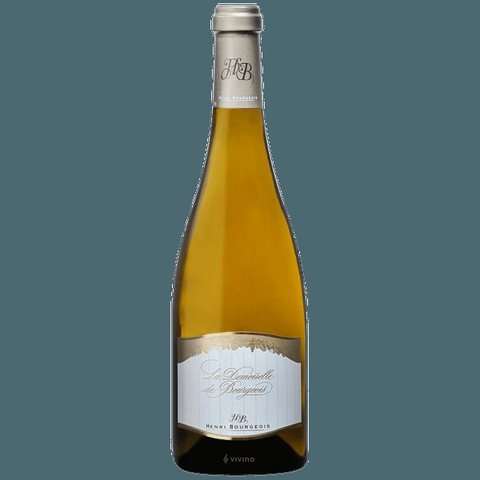
White · Pouilly-Fumé · France
Henri Bourgeois Pouilly-Fumé La Demoiselle de Bourgeois JS-150
Scored from 711 calibrated Vivino reviewers. Cohort: White · France (7,336 wines).
Find this wine: view on Vivino · compare prices on Wine-Searcher
Is Pouilly-Fumé La Demoiselle de Bourgeois JS-150 a good wine?
What reviewers say
“Couleur jaune doré clair. Au nez, on sent les agrumes (citrons jaunes et verts, pamplemousse blanc), les fruits exotiques (ananas), les fruits à noyaux (pêche blanche), les notes minérales (craies) et les notes empyreumatiques (sous-bois, vanille). Intensité moyenne "+".”
From a top-rated Vivino review for this bottle.
Summary
Henri Bourgeois Pouilly-Fumé La Demoiselle de Bourgeois JS-150 is Sauvignon Blanc grown in Pouilly-Fumé, bottled as a white. At $49.99 for the lowest 750 ml listing, it belongs to the $30–60 band.
The calibrated figure is built from 711 of its Vivino reviewers. A broader pool of 726 reviewers with two or more ratings feeds the raw-average track instead. 7,335 other whites from France form the cohort it is ranked inside.
- Cohort
- White · France · 7,336 wines
- Calibrated reviewers
- none yet
Cohort: White · France
Closest peers
 White79.4