Red · North Coast · United States
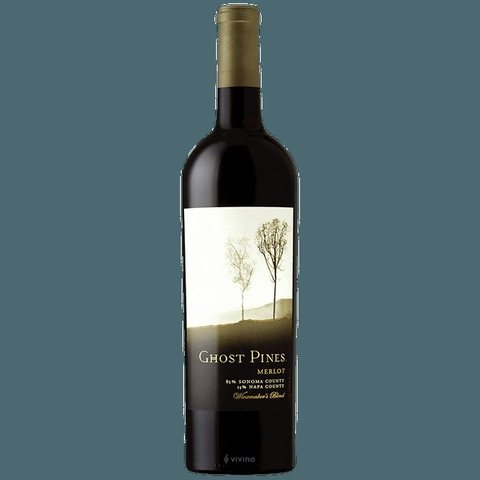
Ghost Pines Merlot
Scored from 1,506 calibrated Vivino reviewers, each re-centered on their own rating baseline before the bottle is ranked. Cohort: Red · United States (1,156 wines).
Find this wine: view on Vivino · compare prices on Wine-Searcher
What reviewers say
“Ghost Pines Merlot offers an inviting nose with aromas of ripe berries, cherries and a hint of jam complemented by subtle notes of tabacco.”
From a top-rated Vivino review for this bottle.
Summary
Brings both of these elements together in full-force along with some aromas of dried black cherry and humidor with toastiness. The result is a wine with a dense body showing through in the more classically structured tannins.
From North Coast in the United States, Ghost Pines Merlot is a red. It sits in the $15–30 band, on a lowest observed 750 ml price of $21.00.
The cohort it is ranked inside holds 1,156 American reds. The calibrated figure is built from 1,506 reviewers whose rating history varies enough to place their own average. A broader pool of 1,599 reviewers with two or more ratings feeds the raw-average track instead.
How the score was built
We compare the reviewers of this bottle against every other wine those same people reviewed. Each review is scored relative to the reviewer's own baseline — four stars from someone who hands out fives means something very different from four stars from someone who rarely goes above three. Every reviewer then counts the same, so the result is a calibrated consensus rather than a star average.
- Global percentile
- Where Ghost Pines Merlot lands against every wine we rank.
- In-cohort percentile
- The same comparison narrowed to its cohort — wines of the same type from the same country. A Chilean red is judged against Chilean reds, not against Champagne. Ranked against Red · United States (1,156 wines).
- AI-adjusted percentile
- The same reviewer-normalized score, corrected for how much confidence the sample supports: thin samples are pulled toward the corpus average. Each wine keeps the share n / (n + 53) of its measured distance from the average, where n is its calibrated-reviewer count, and the result is ranked on the same scale as the global percentile.53 is the median sample size across everything we rank. Here n is 1,506.