Rosé · Languedoc · France
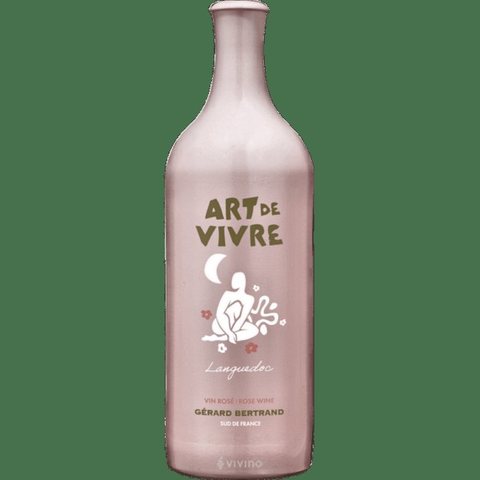
Gérard Bertrand Art de Vivre Rosé
Scored from 67 calibrated Vivino reviewers. Cohort: Rosé · France (2,010 wines).
Find this wine: view on Vivino · compare prices on Wine-Searcher
Is Art de Vivre Rosé a good wine?
What reviewers say
“Languedoc rosé uit een kruik en verrassend lekker! Kleur van een gris, behoorlijk fris met mooie aroma’s en smaken van citrus, witvlezige perzik, sinaasappelschil, licht kruidig en zweem van bloesem. Ranke body, medium zuren, zacht bittertje en fijne afdronk. Alles is prima in balans met elkaar en is gewoon lekker. Jel was ook fan en werd alleen al blij van de fles🤗 Millau 12-8-2024”
From a top-rated Vivino review for this bottle.
Summary
From Languedoc in France, Gérard Bertrand Art de Vivre Rosé is a rosé. It blends Grenache Noir, Cinsault and Shiraz Syrah.
2,009 other rosés from France form the cohort it is ranked inside. 67 Vivino reviewers are calibrated for this bottle, and those are the ones the calibrated score reads; a separate, broader pool of 68 reviewers with at least two ratings each feeds the raw-average track.
- Cohort
- Rosé · France · 2,010 wines
- Calibrated reviewers
- none yet
Cohort: Rosé · France