Red · Paso Robles · United States
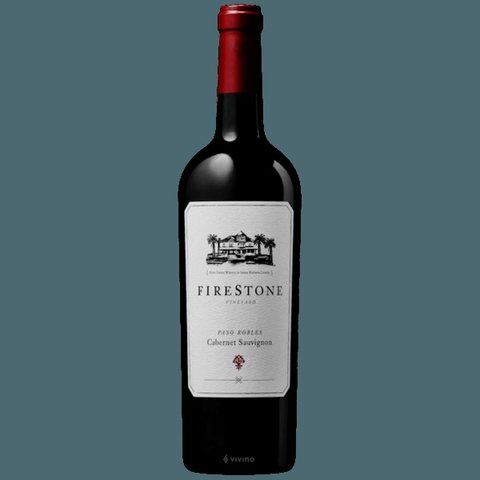
Firestone Paso Robles Cabernet Sauvignon
Scored from 299 calibrated Vivino reviewers. Cohort: Red · United States (1,156 wines).
Find this wine: view on Vivino · compare prices on Wine-Searcher
Is Paso Robles Cabernet Sauvignon a good wine?
What reviewers say
“Got from Taylor’s Meat Market in beloved Sierra Madre. Very good $15 cab. Easy drinking with food, but also without food with mid-tannins. On the nose, notes of plum and strawberry with a little bit of vanilla. Very firm, but not overwhelming notes of oak and tobacco on the mouthfeel, with a solid foundation of sweet fruit to support it. At this price point, I will most definitely be revisiting this wine.”
From a top-rated Vivino review for this bottle.
Summary
From Paso Robles in the United States, Firestone Paso Robles Cabernet Sauvignon is a red. It sits in the $15–30 band, on a lowest observed 750 ml price of $16.99.
The cohort it is ranked inside holds 1,156 American reds. The calibrated figure is built from 299 of its Vivino reviewers. A broader pool of 306 reviewers with two or more ratings feeds the raw-average track instead.
- Cohort
- Red · United States · 1,156 wines
- Calibrated reviewers
- none yet
Cohort: Red · United States