Red · Saint-Joseph · France
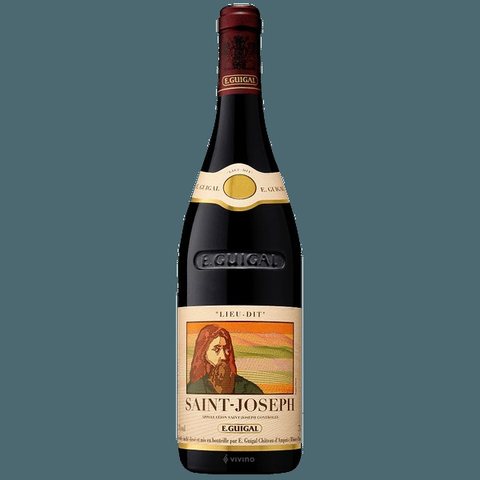
E. Guigal Saint-Joseph Lieu-Dit
Scored from 766 calibrated Vivino reviewers. Cohort: Red · France (1,134 wines).
Find this wine: view on Vivino · compare prices on Wine-Searcher
Is Saint-Joseph Lieu-Dit a good wine?
Tasting profile
A full-bodied Syrah showing blackcurrant, red fruit, and licorice notes lifted by spicy pepper and a suave, layered palate. Reviewers single it out as one of the finest red Saint-Josephs, with a long, saturated finish that lingers.
Synthesized from 766Vivino reviewers' tasting notes for this bottle.
What reviewers say
“Full bodied wine infused with flavors of blackcurrant and pepper. Long and saturated on the palate.”
From a top-rated Vivino review for this bottle.
Summary
From Saint-Joseph in France, E. Guigal Saint-Joseph Lieu-Dit is a red. The cheapest 750 ml listing found for it is $48.60, which puts the bottle in the $30–60 band.
1,133 other reds from France form the cohort it is ranked inside. The calibrated figure is built from 766 of its Vivino reviewers. A broader pool of 780 reviewers with two or more ratings feeds the raw-average track instead.
- Cohort
- Red · France · 1,134 wines
- Calibrated reviewers
- none yet
Cohort: Red · France