White · Pfalz · Deutschland
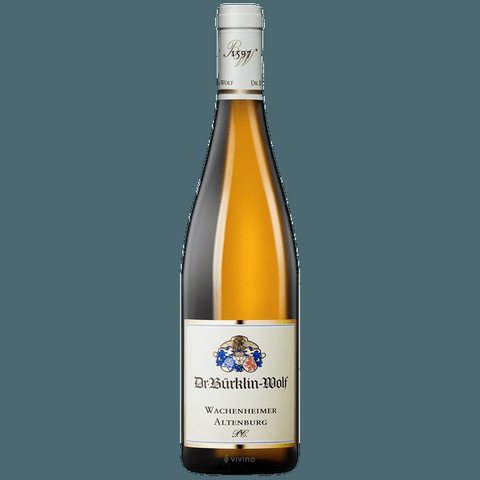
Dr. Bürklin-Wolf Wachenheimer Altenburg P.C
Scored from 225 calibrated Vivino reviewers. Cohort: White · Deutschland (929 wines).
Find this wine: view on Vivino · compare prices on Wine-Searcher
Is Wachenheimer Altenburg P.C a good wine?
What reviewers say
“OMG WHAT A WINE! After this headline please don't expect the best and finest wine of all time, but it's definetely one of the best (in terms of enjoyable) young dry wines I have ever tasted! Shining golden colour.”
From a top-rated Vivino review for this bottle.
Summary
It has Subtle fruit aromas of melons. It has distinctive mineral and spice. Lively mineral and Mirabelle fruit in the finish.
Dr. Bürklin-Wolf Wachenheimer Altenburg P.C is a German white made from Riesling. It is bottled in Pfalz. At $62.72 for the lowest 750 ml listing, it belongs to the $60–120 band.
225 Vivino reviewers are calibrated for this bottle, and those are the ones the calibrated score reads; a separate, broader pool of 227 reviewers with at least two ratings each feeds the raw-average track. Its in-cohort standing is measured against 928 other whites from Germany, not against the corpus as a whole.
- Cohort
- White · Deutschland · 929 wines
- Calibrated reviewers
- none yet
Cohort: White · Deutschland