Red · Saint-Estèphe · Francia
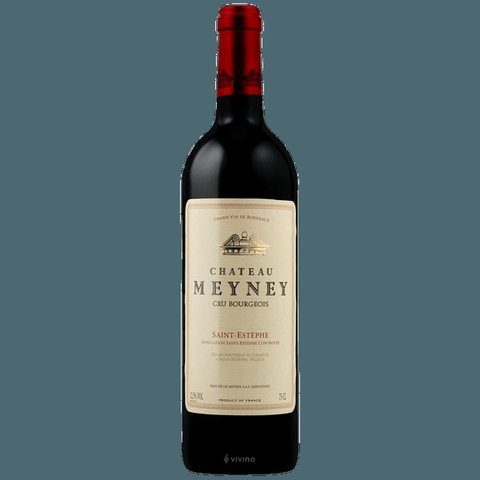
Château Meyney Saint-Estèphe
Scored from 4,251 calibrated Vivino reviewers. Cohort: Red · Francia (72 wines).
Find this wine: view on Vivino · compare prices on Wine-Searcher
Is Saint-Estèphe a good wine?
What reviewers say
“Belle robe rubis sombre légèrement opaque, nez puissant et terreux de tabac, de musc et de mûres.”
From a top-rated Vivino review for this bottle.
Summary
Shows notes of leather and musk after a period of time. It is full-bodied, well-rounded and structured. After ageing, the wine displays the remarkable charm of the best Saint-Estèphe: complexity, balance and harmony.
Château Meyney Saint-Estèphe is a red from Saint-Estèphe, France. It sits in the $30–60 band, on a lowest observed 750 ml price of $38.63. It is made from Cabernet Sauvignon.
4,251 Vivino reviewers are calibrated for this bottle, and those are the ones the calibrated score reads; a separate, broader pool of 4,362 reviewers with at least two ratings each feeds the raw-average track. Its in-cohort standing is measured against 71 other reds from France, not against the corpus as a whole.
- Cohort
- Red · Francia · 72 wines
- Calibrated reviewers
- none yet