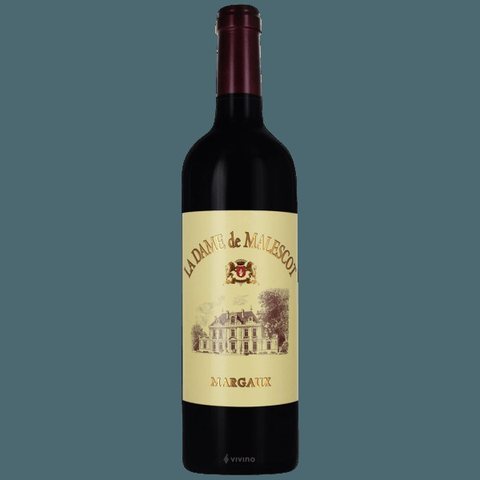
Red · Margaux · France
Château Malescot St. Exupery La Dame de Malescot Margaux
Scored from 1,494 calibrated Vivino reviewers. Cohort: Red · France (1,134 wines).
Find this wine: view on Vivino · compare prices on Wine-Searcher
Is La Dame de Malescot Margaux a good wine?
What reviewers say
“Une sombre robe rubis aux reflets troubles, le nez est complexe et expressif, aux arômes de cerises noires, cassis, prunes, boisés, du tabac et un peu de vanille… En bouche, l’entame est ample, une bonne rondeur, de la puissance, les tannins sont présents mais mesurés, un bel équ…”
From a top-rated Vivino review for this bottle.
Summary
From Margaux in France, Château Malescot St. Exupery La Dame de Malescot Margaux is a red. At $42.86 for the lowest 750 ml listing, it belongs to the $30–60 band. It blends Cabernet Sauvignon and Merlot.
1,133 other reds from France form the cohort it is ranked inside. 1,494 Vivino reviewers are calibrated for this bottle, and those are the ones the calibrated score reads; a separate, broader pool of 1,535 reviewers with at least two ratings each feeds the raw-average track.
- Cohort
- Red · France · 1,134 wines
- Calibrated reviewers
- none yet
Cohort: Red · France