Red · Pessac-Léognan · France
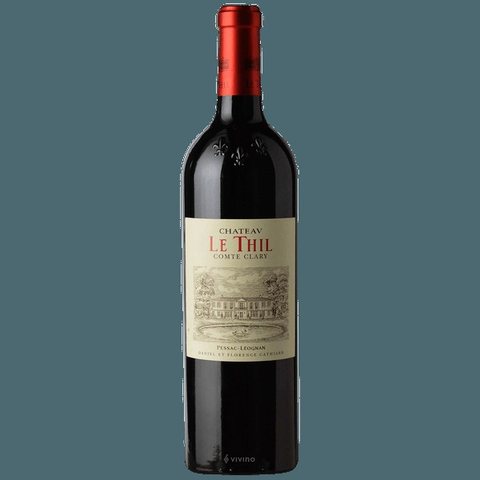
Château le Thil Comte Clary Pessac-Leognan
Scored from 306 calibrated Vivino reviewers. Cohort: Red · France (1,134 wines).
Find this wine: view on Vivino · compare prices on Wine-Searcher
Is Comte Clary Pessac-Leognan a good wine?
What reviewers say
“Deep ruby with purple tinge on rim M nose of v ripe plum. Then blueberry conserve, rose essence, vanilla . Sandalwood. After more time then cassis, dried earth + bay leaf, dark choc even. But overnight: nose becomes much elegant with the overripness disappearing.”
From a top-rated Vivino review for this bottle.
Summary
Great richness and intensity. Aromas of smoke, lead pencil shavings, sweet kirsch and black currants soar from the glass of this medium to full-bodied, opulent, fleshy wine.
Château le Thil Comte Clary Pessac-Leognan is a red from Pessac-Léognan, France, blended from Cabernet Franc and Merlot.
1,133 other reds from France form the cohort it is ranked inside. The calibrated figure is built from 306 of its Vivino reviewers. A broader pool of 317 reviewers with two or more ratings feeds the raw-average track instead.
- Cohort
- Red · France · 1,134 wines
- Calibrated reviewers
- none yet