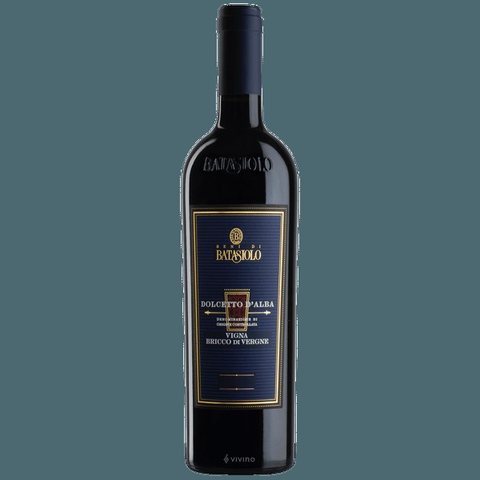
Red · Dolcetto d'Alba · Italie
Batasiolo Dolcetto d'Alba Bricco di Vergne
Scored from 1,427 calibrated Vivino reviewers. Cohort: Red · Italie (153 wines).
Find this wine: view on Vivino · compare prices on Wine-Searcher
Is Dolcetto d'Alba Bricco di Vergne a good wine?
What reviewers say
“Surpreendeu! Um Batasiolo q me enganaria como se fosse de pequeno produtor. E mais: fiquei distante de entender a casta.”
From a top-rated Vivino review for this bottle.
Summary
The color is ruby red with hints of purple, clear and transparent. The nose has great fruitiness with strong evidence of red fruits, cherries and flowers, especially violets. The palate is rich, full, fresh and perfectly balanced with a slight bitter aftertaste. Great personality, offering the full range of feelings of young wines.
Batasiolo Dolcetto d'Alba Bricco di Vergne is a red from Dolcetto d'Alba, Italy.
1,427 Vivino reviewers are calibrated for this bottle, and those are the ones the calibrated score reads; a separate, broader pool of 1,461 reviewers with at least two ratings each feeds the raw-average track. The cohort it is ranked inside holds 153 Italian reds.
- Cohort
- Red · Italie · 153 wines
- Calibrated reviewers
- none yet