Red · California · United States
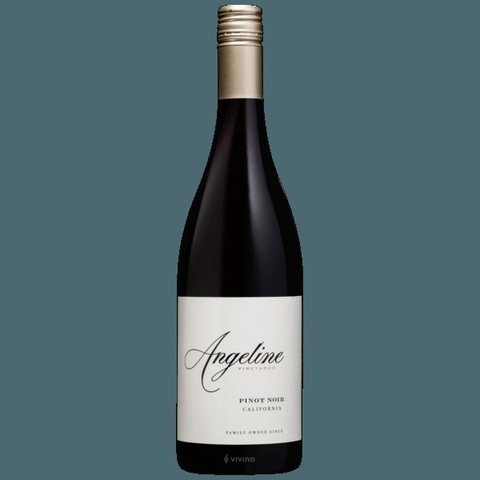
Angeline Pinot Noir
Scored from 4,423 calibrated Vivino reviewers. Cohort: Red · United States (1,156 wines).
Find this wine: view on Vivino · compare prices on Wine-Searcher
Is Pinot Noir a good wine?
What reviewers say
“Martín Ray fue uno de los pioneros de la industria del vino en California y en la década de 1940 comenzó a producir en la zona de Santa Cruz, al sur de San Francisco.”
From a top-rated Vivino review for this bottle.
Summary
A wealth of aromas such as fresh cranberries, maraschino cherries, and orange zest. The palate is round and juicy with lively acidity, and a touch of sweet, toasty oak on the finish
From California in the United States, Angeline Pinot Noir is a red. At $13.19 for the lowest 750 ml listing, it belongs to the under $15 band.
The calibrated figure is built from 4,423 of its Vivino reviewers. A broader pool of 4,582 reviewers with two or more ratings feeds the raw-average track instead. Its in-cohort standing is measured against 1,155 other reds from the United States, not against the corpus as a whole.
- Cohort
- Red · United States · 1,156 wines
- Calibrated reviewers
- none yet
Cohort: Red · United States