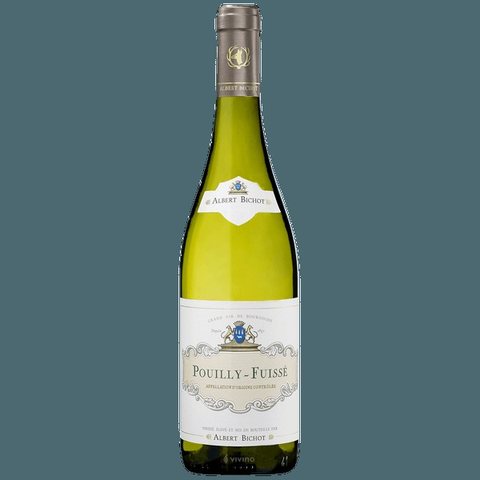
White · Pouilly-Fuissé · France
Albert Bichot Pouilly-Fuissé
Scored from 841 calibrated Vivino reviewers. Cohort: White · France (7,336 wines).
Find this wine: view on Vivino · compare prices on Wine-Searcher
Is Pouilly-Fuissé a good wine?
What reviewers say
“Muy buen vino de Poully Fuisse que nos ofrece Albert Bichot. Un Chardonnay de tomo y lomo, muy expresivo en nariz, con frutas blancas y amarillas. Y de hueso también.”
From a top-rated Vivino review for this bottle.
Summary
It has a pale yellow color with golden highlights. Lively and aromatic nose is dominated by aromas of white fruits and spices on a discrete vanilla oak. The palate is mineral and has a nice balance between vivacity and roundness. Long finish.
Albert Bichot Pouilly-Fuissé is a French white made from Chardonnay. It comes from Pouilly-Fuissé, in France. It sits in the $30–60 band, on a lowest observed 750 ml price of $32.99.
841 Vivino reviewers are calibrated for this bottle, and those are the ones the calibrated score reads; a separate, broader pool of 855 reviewers with at least two ratings each feeds the raw-average track. The cohort it is ranked inside holds 7,336 French whites.
- Cohort
- White · France · 7,336 wines
- Calibrated reviewers
- none yet
Cohort: White · France