Red · South Eastern Australia · Australia
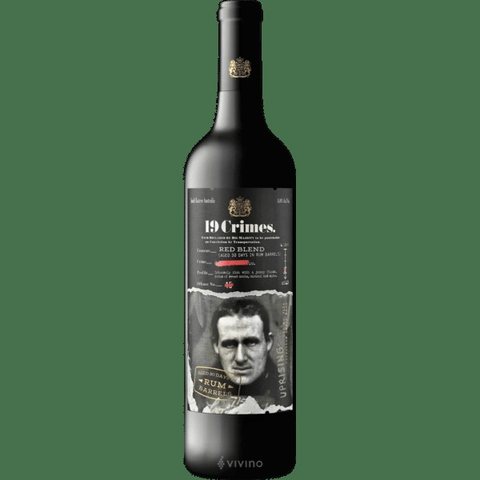
19 Crimes The Uprising Red
Scored from 10,196 calibrated Vivino reviewers. Cohort: Red · Australia (517 wines).
Find this wine: view on Vivino · compare prices on Wine-Searcher
Is The Uprising Red a good wine?
What reviewers say
“Deep purple in the glass, on the nose I find oak, strawberry and scotch whisky. On the palate there is definitely vanilla and some caramel and sweet dark fruits giving cherry or jam notes.”
From a top-rated Vivino review for this bottle.
Summary
The nose has intense lifted mocha, caramel and baking spice notes. On the palate the wine is full and mouth coating with brown sugar, jammy blackberry and chocolate notes.
19 Crimes The Uprising Red is an Australian red made from Cabernet Sauvignon. It is bottled in South Eastern Australia. The cheapest 750 ml listing found for it is $10.37, which puts the bottle in the under $15 band.
10,196 Vivino reviewers are calibrated for this bottle, and those are the ones the calibrated score reads; a separate, broader pool of 10,694 reviewers with at least two ratings each feeds the raw-average track. The cohort it is ranked inside holds 517 Australian reds.
- Cohort
- Red · Australia · 517 wines
- Calibrated reviewers
- none yet