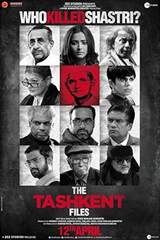
Film · 2019 · Films · 2010s
The Tashkent Files
Scored from 268 calibrated IMDb reviewers. Cohort: Films · 2010s (13,059 peers).
Summary
A young journalist's investigation into the mysterious 1966 death of India's second Prime Minister Lal Bahadur Shastri in Tashkent draws the attention of a politician, who convenes a committee of historians, bureaucrats, activists and journalists to debate whether Shastri was assassinated or died of natural causes. As the panel clashes, buried documents and conflicting narratives force each member to confront uncomfortable questions about history and accountability.
Released in 2019, The Tashkent Files is a drama, mystery and thriller film.
The calibrated figure is built from 268 of its IMDb reviewers. A broader pool of 322 reviewers with two or more reviews feeds the raw-average track instead. Its in-cohort standing is measured against the other 13,058 2010s films, not against the whole corpus. Rotten Tomatoes carries a separate audience for the same title, 5 of whom clear the calibration test.
Is The Tashkent Files (2019) worth watching?
- Cohort
- Films · 2010s · 13,059 titles
- Calibrated reviewers
- 268
Cohort: Films · 2010s