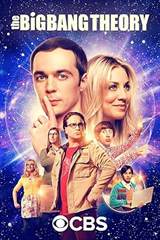
TV Series · 2007 · TV Series · 2000s
The Big Bang Theory
Scored from 954 calibrated IMDb reviewers, each re-centered on their own rating baseline before the title is ranked. Cohort: TV Series · 2000s (1,360 peers).
Summary
Two socially awkward Caltech physicists, Leonard and Sheldon, share an apartment and navigate life alongside their equally geeky friends Howard and Raj. Their insular world is upended when an aspiring actress named Penny moves in across the hall, sparking Leonard's instant crush and a clash between their scientific obsessions and her street-smart, pop-culture-savvy worldview.
Released in 2007, The Big Bang Theory is a comedy and romance television series. Inside comedy it is classed as Goofy.
Rotten Tomatoes carries a separate audience for the same title, 363 of whom clear the calibration test. Its in-cohort standing is measured against the other 1,359 2000s television series, not against the whole corpus. The calibrated figure is built from 954 reviewers whose rating history varies enough to place their own average. A broader pool of 1,026 reviewers with two or more reviews feeds the raw-average track instead.
How the score was built
We compare the reviewers of this title against every other title those same people reviewed. Each review is scored relative to the reviewer's own baseline — a 7/10 from a hard grader sits well above their average, while a 7/10 from a generous grader sits below theirs. Every reviewer then counts the same, so the result is a calibrated consensus rather than a raw average.
- Global percentile
- Where The Big Bang Theory lands against every title we rank.
- In-cohort percentile
- The same comparison narrowed to its cohort — titles of the same format released in the same decade. A 1970s film is judged against 1970s films, not against last year's streaming series. Ranked against TV Series · 2000s (1,360 titles).
- AI-adjusted percentile
- The same reviewer-normalized score, corrected for how much confidence the sample supports: thin samples are pulled toward the corpus average. Each title keeps the share n / (n + 53) of its measured distance from the average, where n is its calibrated-reviewer count, and the result is ranked on the same scale as the global percentile.53 is the median sample size across everything we rank. Here n is 954.
Cohort: TV Series · 2000s