Film · 1996 · Films · 1990s
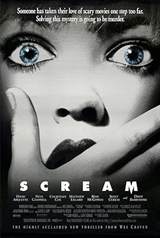
Scream
Scored from 1,085 calibrated IMDb reviewers. Cohort: Films · 1990s (4,082 peers).
Summary
A masked killer known as Ghostface begins murdering teenagers in the small town of Woodsboro, California. As the murders escalate, a group of high school students including Sidney Prescott becomes the target of the killer's deadly game. The film opens with an intense attack on Casey Becker before introducing the main characters and their interconnected lives.
Scream is a 1996 horror, thriller and mystery film directed by Wes Craven. Its country of origin is listed as the United States. It runs 1h 51m and carries an R certificate. Neve Campbell, David Arquette and Courtney Cox head the billed cast.
4,081 other films from the 1990s form the cohort it is ranked inside. The calibrated figure is built from 1,085 of its IMDb reviewers. A broader pool of 1,141 reviewers with two or more reviews feeds the raw-average track instead. Rotten Tomatoes carries a separate audience for the same title, 190 of whom clear the calibration test.
Is Scream (1996) worth watching?
- Cohort
- Films · 1990s · 4,082 titles
- Calibrated reviewers
- 1,085
Cohort: Films · 1990s