Film · 1998 · Films · 1990s
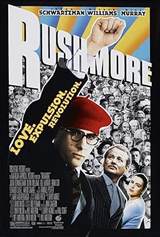
Rushmore
Scored from 427 calibrated IMDb reviewers. Cohort: Films · 1990s (4,082 peers).
Summary
Max Fischer is an eccentric student at Rushmore Academy who channels his energy into elaborate extracurricular activities rather than academics. When a wealthy industrialist becomes a major school benefactor and develops an unexpected friendship with Max, their bond becomes strained when both develop romantic interest in a beautiful schoolteacher.
Released in 1998, Rushmore is a comedy and drama film. It was directed by Wes Anderson. Inside comedy it is classed as Dramedy. Its certificate is R. Its country of origin is listed as the United States. Jason Schwartzman, Bill Murray and Olivia Williams head the billed cast. It runs 1h 44m.
Rotten Tomatoes carries a separate audience for the same title, 7,826 of whom clear the calibration test. The cohort it is ranked inside is 1990s films — 4,082 of them. The calibrated figure is built from 427 of its IMDb reviewers. A broader pool of 454 reviewers with two or more reviews feeds the raw-average track instead.
Is Rushmore (1998) worth watching?
- Cohort
- Films · 1990s · 4,082 titles
- Calibrated reviewers
- 427
Cohort: Films · 1990s