Film · 2015 · Films · 2010s
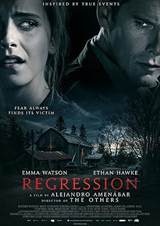
Regression
Scored from 136 calibrated IMDb reviewers. Cohort: Films · 2010s (13,059 peers).
Summary
In 1990 Minnesota, detective Bruce Kenner investigates a young woman's claim that her father sexually abused her in a satanic ritual, though the father has no memory of the act. With the help of a psychologist using regression hypnosis to recover repressed memories, Kenner uncovers what appears to be a widespread satanic cult, but the deeper he digs, the more his own grip on reality begins to slip.
Regression is a 2015 crime, drama and mystery film.
A second review pool sits behind it as well: 179 Rotten Tomatoes reviewers clear the same calibration test, and Rankquant scores them separately. 136 IMDb reviewers are calibrated for this title, and those are the ones the calibrated score reads; a separate, broader pool of 137 reviewers with at least two reviews each feeds the raw-average track. Its in-cohort standing is measured against the other 13,058 2010s films, not against the whole corpus.
Is Regression (2015) worth watching?
- Cohort
- Films · 2010s · 13,059 titles
- Calibrated reviewers
- 136
Cohort: Films · 2010s