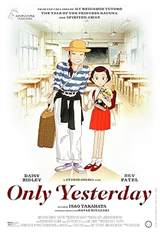
Film · 1991 · Films · 1990s
Only Yesterday
Scored from 119 calibrated IMDb reviewers, each re-centered on their own rating baseline before the title is ranked. Cohort: Films · 1990s (4,082 peers).
Summary
A 27-year-old Tokyo office worker named Taeko takes a vacation to the rural countryside to help with the safflower harvest, and during the trip she finds herself vividly revisiting memories of her 10-year-old self. As her present and past selves intertwine, she reflects on childhood disappointments, family, and unfulfilled dreams while reconsidering the direction of her adult life.
Only Yesterday is a 1991 animation, drama and romance film.
The cohort it is ranked inside is 1990s films — 4,082 of them. A second review pool sits behind it as well: 51 Rotten Tomatoes reviewers clear the same calibration test, and Rankquant scores them separately. 119 IMDb reviewers rate with enough spread for a personal baseline to be measured, and those are the ones the calibrated score reads; a separate, broader pool of 125 reviewers with at least two reviews each feeds the raw-average track.
How the score was built
We compare the reviewers of this title against every other title those same people reviewed. Each review is scored relative to the reviewer's own baseline — a 7/10 from a hard grader sits well above their average, while a 7/10 from a generous grader sits below theirs. Every reviewer then counts the same, so the result is a calibrated consensus rather than a raw average.
- Global percentile
- Where Only Yesterday lands against every title we rank.
- In-cohort percentile
- The same comparison narrowed to its cohort — titles of the same format released in the same decade. A 1970s film is judged against 1970s films, not against last year's streaming series. Ranked against Films · 1990s (4,082 titles).
- AI-adjusted percentile
- The same reviewer-normalized score, corrected for how much confidence the sample supports: thin samples are pulled toward the corpus average. Each title keeps the share n / (n + 53) of its measured distance from the average, where n is its calibrated-reviewer count, and the result is ranked on the same scale as the global percentile.53 is the median sample size across everything we rank. Here n is 119.
Cohort: Films · 1990s