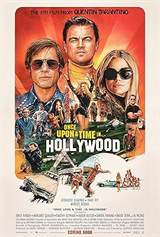
Film · 2019 · Films · 2010s
Once Upon a Time... in Hollywood
Scored from 4,326 calibrated IMDb reviewers. Cohort: Films · 2010s (13,059 peers).
Summary
In 1969 Los Angeles, a fading television actor and his longtime stunt double navigate the changing film industry and encounter the Manson Family during a transformative summer. The film follows their intersecting lives as they struggle with relevance while the counterculture movement reshapes Hollywood.
Released in 2019, Once Upon a Time... in Hollywood is a drama, comedy and crime film. Its certificate is R. Inside comedy it is classed as Dramedy. Quentin Tarantino directed it, with Leonardo DiCaprio, Brad Pitt and Margot Robbie in the cast. Its country of origin is listed as the United States. It runs 2h 41m.
Rotten Tomatoes carries a separate audience for the same title, 3,805 of whom clear the calibration test. The calibrated figure is built from 4,326 of its IMDb reviewers. A broader pool of 4,585 reviewers with two or more reviews feeds the raw-average track instead. The cohort it is ranked inside is 2010s films — 13,059 of them.
Is Once Upon a Time... in Hollywood (2019) worth watching?
- Cohort
- Films · 2010s · 13,059 titles
- Calibrated reviewers
- 4,326
Cohort: Films · 2010s