Film · 2018 · Films · 2010s
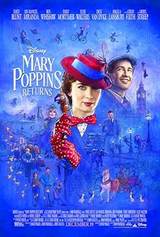
Mary Poppins Returns
Scored from 891 calibrated IMDb reviewers. Cohort: Films · 2010s (13,059 peers).
Summary
In 1930s London, the magical Mary Poppins mysteriously returns to help the Banks family during financial hardship and emotional turmoil, bringing enchantment and wonder through fantastical adventures with them and a street lamplighter named Jack.
Mary Poppins Returns is a 2018 fantasy, musical and comedy film directed by Rob Marshall. It runs 2h 10m. Inside comedy it is classed as Goofy. Its certificate is PG. Emily Blunt, Lin-Manuel Miranda and Ben Whishaw head the billed cast. Its country of origin is listed as the United States.
Rotten Tomatoes carries a separate audience for the same title, 1,080 of whom clear the calibration test. Its in-cohort standing is measured against the other 13,058 2010s films, not against the whole corpus. The calibrated figure is built from 891 of its IMDb reviewers. A broader pool of 938 reviewers with two or more reviews feeds the raw-average track instead.
Is Mary Poppins Returns (2018) worth watching?
- Cohort
- Films · 2010s · 13,059 titles
- Calibrated reviewers
- 891
Cohort: Films · 2010s