TV Mini Series · 2019 · TV Mini Series · 2010s
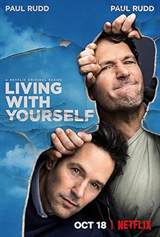
Living with Yourself
Scored from 238 calibrated IMDb reviewers. Cohort: TV Mini Series · 2010s (702 peers).
Summary
Miles Elliot, a burned-out marketing copywriter stuck in a creative and personal rut, undergoes a mysterious spa treatment promising to make him a better man. He soon discovers the procedure has produced a happier, more capable clone of himself, forcing the two Miles to share one life, one wife, and one job while wrestling with what it means to be the better version.
Living with Yourself (2019) is a miniseries IMDb files under the comedy, drama and science-fiction genres. Inside comedy it is classed as Dramedy.
Rotten Tomatoes carries a separate audience for the same title, 84 of whom clear the calibration test. The calibrated figure is built from 238 of its IMDb reviewers. A broader pool of 248 reviewers with two or more reviews feeds the raw-average track instead. Its in-cohort standing is measured against the other 701 2010s miniseries, not against the whole corpus.
Is Living with Yourself (2019) worth watching?
- Cohort
- TV Mini Series · 2010s · 702 titles
- Calibrated reviewers
- 238
Cohort: TV Mini Series · 2010s