Film · 2008 · Films · 2000s
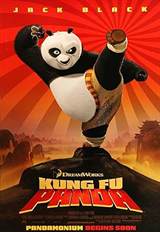
Kung Fu Panda
Scored from 480 calibrated IMDb reviewers. Cohort: Films · 2000s (7,847 peers).
Summary
Po, a clumsy panda noodle-shop worker, is unexpectedly chosen as the legendary Dragon Warrior to defend the Valley of Peace from the escaped villain Tai Lung. With little martial arts training but boundless enthusiasm, Po must train under the reluctant Master Shifu and prove himself worthy to the Furious Five warriors.
Released in 2008, Kung Fu Panda is an animation, action and comedy film. Its certificate is PG. Mark Osborne and John Stevenson directed it, with Jack Black, Dustin Hoffman and Angelina Jolie in the cast. It runs 1h 32m. Its country of origin is listed as the United States.
The calibrated figure is built from 480 of its IMDb reviewers. A broader pool of 494 reviewers with two or more reviews feeds the raw-average track instead. 7,846 other films from the 2000s form the cohort it is ranked inside. Rotten Tomatoes carries a separate audience for the same title, 24,839 of whom clear the calibration test.
Is Kung Fu Panda (2008) worth watching?
- Cohort
- Films · 2000s · 7,847 titles
- Calibrated reviewers
- 480
Cohort: Films · 2000s