Film · 2017 · Films · 2010s
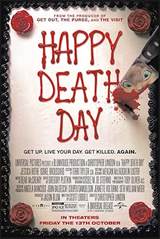
Happy Death Day
Scored from 558 calibrated IMDb reviewers. Cohort: Films · 2010s (13,059 peers).
Summary
A college student is murdered on her birthday and finds herself trapped in a time loop, forced to relive the same day over and over. As she experiences her death repeatedly, she begins to identify clues about her killer's identity. She must use each loop to gather information and prevent her murder.
Released in 2017, Happy Death Day is a horror, thriller and comedy film. Jessica Rothe, Israel Broussard and Ruby Modine head the billed cast. Its country of origin is listed as the United States. Christopher Landon directed it. Its certificate is PG-13. It runs 1h 36m.
The calibrated figure is built from 558 of its IMDb reviewers. A broader pool of 563 reviewers with two or more reviews feeds the raw-average track instead. Its in-cohort standing is measured against the other 13,058 2010s films, not against the whole corpus. Rotten Tomatoes carries a separate audience for the same title, 853 of whom clear the calibration test.
Is Happy Death Day (2017) worth watching?
- Cohort
- Films · 2010s · 13,059 titles
- Calibrated reviewers
- 558
Cohort: Films · 2010s