Film · 1993 · Films · 1990s
Groundhog Day
Scored from 771 calibrated IMDb reviewers. Cohort: Films · 1990s (4,082 peers).
Summary
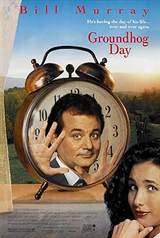
A cynical television weatherman is sent to cover the annual Groundhog Day celebration in Punxsutawney, Pennsylvania, where he becomes trapped in a time loop, forced to relive the same day repeatedly. As the loop continues, he gradually transforms from a selfish cynic into a better person through repeated interactions with the townspeople and a local producer.
Released in 1993, Groundhog Day is a comedy, romance and fantasy film. Inside comedy it is classed as Dramedy. Its country of origin is listed as the United States. Bill Murray, Andie MacDowell and Chris Elliott head the billed cast. Its certificate is PG. It runs 1h 41m. Harold Ramis directed it.
The calibrated figure is built from 771 of its IMDb reviewers. A broader pool of 810 reviewers with two or more reviews feeds the raw-average track instead. Rotten Tomatoes carries a separate audience for the same title, 13,863 of whom clear the calibration test. Its in-cohort standing is measured against the other 4,081 1990s films, not against the whole corpus.
Is Groundhog Day (1993) worth watching?
- Cohort
- Films · 1990s · 4,082 titles
- Calibrated reviewers
- 771
Cohort: Films · 1990s