RankquantRQ
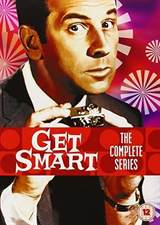
Get Smart (1965) poster
1965
global pct
95.5

TV Series · 1965 · TV Series · 1960s

Get Smart

Scored from 32 calibrated IMDb reviewers, each re-centered on their own rating baseline before the title is ranked. Cohort: TV Series · 1960s (154 peers).

95.5%
Global percentile
vs. all 52,376 ranked titles
81.7%
In-cohort percentile
TV Series · 1960s · 154 titles
94.5%
AI-adjusted percentile
32 calibrated reviewers, thin samples pulled to the mean

Summary

Maxwell Smart, Agent 86 of the Washington-based spy outfit CONTROL, is a supremely confident bungler assigned to thwart KAOS, 'the international organization of evil.' Each half-hour sends him after mad scientists, assassins and doomsday devices alongside the far more competent Agent 99 and their long-suffering boss, the Chief, who absorbs most of the collateral damage. Running gags include the shoe phone, the malfunctioning Cone of Silence, and catchphrases such as 'Would you believe...' and 'Missed it by that much.' Created by Mel Brooks and Buck Henry, this 1965 sitcom spoofs the James Bond and spy-thriller boom of its era.

Get Smart (1965) is a television series IMDb files under the action, adventure and comedy genres. A typical episode runs 30 minutes. It was made in the United States. It is rated TV-PG.

Only 32 of its IMDb reviewers rate with enough spread for a personal baseline to be measured, so the calibrated figure rests on a thin sample; a broader pool of 32 reviewers with at least two reviews feeds the raw-average track. A second review pool sits behind it as well: 7 Rotten Tomatoes reviewers clear the same calibration test, and Rankquant scores them separately. 153 other television series from the 1960s form the cohort it is ranked inside.

How the score was built

We compare the reviewers of this title against every other title those same people reviewed. Each review is scored relative to the reviewer's own baseline — a 7/10 from a hard grader sits well above their average, while a 7/10 from a generous grader sits below theirs. Every reviewer then counts the same, so the result is a calibrated consensus rather than a raw average.

Global percentile
Where Get Smart lands against every title we rank.
In-cohort percentile
The same comparison narrowed to its cohort — titles of the same format released in the same decade. A 1970s film is judged against 1970s films, not against last year's streaming series. Ranked against TV Series · 1960s (154 titles).
AI-adjusted percentile
The same reviewer-normalized score, corrected for how much confidence the sample supports: thin samples are pulled toward the corpus average. Each title keeps the share n / (n + 53) of its measured distance from the average, where n is its calibrated-reviewer count, and the result is ranked on the same scale as the global percentile.53 is the median sample size across everything we rank. Here n is 32.

Cohort: TV Series · 1960s

Closest peers in the same cohort

See all 52,376