Film · 2016 · Films · 2010s
Florence Foster Jenkins
Scored from 195 calibrated IMDb reviewers. Cohort: Films · 2010s (13,059 peers).
Summary
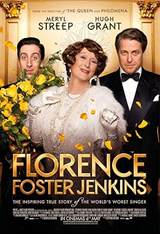
In 1940s New York, wealthy socialite and amateur soprano Florence Foster Jenkins pursues her dream of becoming a great opera singer, despite a voice that is famously, painfully off-key. Her devoted husband and manager St. Clair Bayfield goes to elaborate lengths to shield her from criticism, while a young pianist hired as her accompanist struggles to keep a straight face as her ambitions culminate in a sold-out concert at Carnegie Hall.
Florence Foster Jenkins is a 2016 biography, comedy and drama film. Inside comedy it is classed as Dramedy.
Rotten Tomatoes carries a separate audience for the same title, 528 of whom clear the calibration test. The calibrated figure is built from 195 of its IMDb reviewers. A broader pool of 197 reviewers with two or more reviews feeds the raw-average track instead. Its in-cohort standing is measured against the other 13,058 2010s films, not against the whole corpus.
Is Florence Foster Jenkins (2016) worth watching?
- Cohort
- Films · 2010s · 13,059 titles
- Calibrated reviewers
- 195
Cohort: Films · 2010s