RankquantRQ
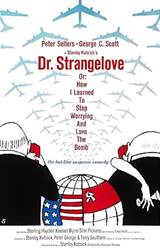
Dr. Strangelove or: How I Learned to Stop Worrying and Love the Bomb (1964) poster
1964
global pct
92.8

Film · 1964 · Films · 1960s

Dr. Strangelove or: How I Learned to Stop Worrying and Love the Bomb

Scored from 890 calibrated IMDb reviewers, each re-centered on their own rating baseline before the title is ranked. Cohort: Films · 1960s (1,929 peers).

92.8%
Global percentile
vs. all 52,376 ranked titles
90.8%
In-cohort percentile
Films · 1960s · 1,929 titles
99.7%
AI-adjusted percentile
890 calibrated reviewers, thin samples pulled to the mean

Summary

Stanley Kubrick's Cold War satire opens as Brigadier General Jack D. Ripper, convinced fluoridated water is a Communist plot against his 'precious bodily fluids,' seals Burpelson Air Force Base and orders his B-52 wing to attack the Soviet Union under Wing Attack Plan R. Only Ripper knows the recall code, leaving RAF exchange officer Group Captain Lionel Mandrake to pry it out of him. In the Pentagon War Room, President Merkin Muffley, the hawkish General Buck Turgidson and ex-Nazi adviser Dr. Strangelove work the hotline to Moscow, where the Soviets admit to a doomsday device that fires automatically. Aboard one bomber, Major T. J. 'King' Kong flies on toward his target, with Peter Sellers playing Mandrake, Muffley and Strangelove.

Stanley Kubrick directed Dr. Strangelove or: How I Learned to Stop Worrying and Love the Bomb, a comedy, satire and war film from 1964. It was made in the United States. It stars Peter Sellers, George C. Scott and Sterling Hayden. It is rated PG. The runtime is 95 minutes. Its comedy subtype is Dark Comedy.

Its in-cohort standing is measured against the other 1,928 1960s films, not against the whole corpus. 890 IMDb reviewers rate with enough spread for a personal baseline to be measured, and those are the ones the calibrated score reads; a separate, broader pool of 936 reviewers with at least two reviews each feeds the raw-average track.

ComedySatireWar

How the score was built

We compare the reviewers of this title against every other title those same people reviewed. Each review is scored relative to the reviewer's own baseline — a 7/10 from a hard grader sits well above their average, while a 7/10 from a generous grader sits below theirs. Every reviewer then counts the same, so the result is a calibrated consensus rather than a raw average.

Global percentile
Where Dr. Strangelove or: How I Learned to Stop Worrying and Love the Bomb lands against every title we rank.
In-cohort percentile
The same comparison narrowed to its cohort — titles of the same format released in the same decade. A 1970s film is judged against 1970s films, not against last year's streaming series. Ranked against Films · 1960s (1,929 titles).
AI-adjusted percentile
The same reviewer-normalized score, corrected for how much confidence the sample supports: thin samples are pulled toward the corpus average. Each title keeps the share n / (n + 53) of its measured distance from the average, where n is its calibrated-reviewer count, and the result is ranked on the same scale as the global percentile.53 is the median sample size across everything we rank. Here n is 890.

Cohort: Films · 1960s

Closest peers in the same cohort

See all 52,376