Film · 2009 · Films · 2000s
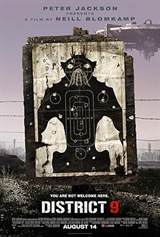
District 9
Scored from 1,123 calibrated IMDb reviewers. Cohort: Films · 2000s (7,847 peers).
Summary
When a massive alien spacecraft hovers over Johannesburg, South Africa, the extraterrestrial refugees are confined to a sprawling slum called District 9. Twenty years later, bureaucrat Wikus van de Merwe is tasked with relocating the aliens when he's accidentally exposed to an alien substance, causing him to begin a terrifying physical transformation.
District 9 (2009) is a film IMDb files under the science fiction, action and thriller genres. It was made in South Africa. It runs 1h 52m. It stars Sharlto Copley, Jason Cope and David James. It is rated R. It was directed by Neill Blomkamp.
1,123 IMDb reviewers are calibrated for this title, and those are the ones the calibrated score reads; a separate, broader pool of 1,171 reviewers with at least two reviews each feeds the raw-average track. The cohort it is ranked inside is 2000s films — 7,847 of them. A second review pool sits behind it as well: 28,577 Rotten Tomatoes reviewers clear the same calibration test, and Rankquant scores them separately.
Is District 9 (2009) worth watching?
- Cohort
- Films · 2000s · 7,847 titles
- Calibrated reviewers
- 1,123
Cohort: Films · 2000s