Film · 2010 · Films · 2010s
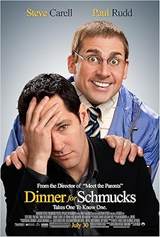
Dinner for Schmucks
Scored from 275 calibrated IMDb reviewers. Cohort: Films · 2010s (13,059 peers).
Summary
An ambitious financial executive is invited to his boss's monthly dinner, where guests compete to bring the most eccentric oddball as entertainment. He recruits Barry, a cheerful IRS employee who builds elaborate dioramas with taxidermied mice, but Barry's well-meaning bumbling quickly unravels his career, relationship, and life in escalating chaos.
Released in 2010, Dinner for Schmucks is a comedy film. Its comedy subtype is Goofy.
A second review pool sits behind it as well: 5,665 Rotten Tomatoes reviewers clear the same calibration test, and Rankquant scores them separately. Its in-cohort standing is measured against the other 13,058 2010s films, not against the whole corpus. 275 IMDb reviewers are calibrated for this title, and those are the ones the calibrated score reads; a separate, broader pool of 283 reviewers with at least two reviews each feeds the raw-average track.
Is Dinner for Schmucks (2010) worth watching?
- Cohort
- Films · 2010s · 13,059 titles
- Calibrated reviewers
- 275
Cohort: Films · 2010s