Film · 2008 · Films · 2000s
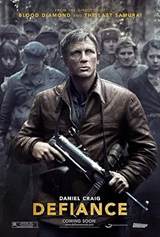
Defiance
Scored from 238 calibrated IMDb reviewers. Cohort: Films · 2000s (7,847 peers).
Summary
During World War II in Nazi-occupied Belarus, three Jewish brothers - Tuvia, Zus, and Asael Bielski - escape into the Belarusian forests after their parents are murdered. There they build a hidden refugee community, sheltering and arming hundreds of Jews who have fled the ghettos, while clashing with German forces, local collaborators, and Soviet partisans - and with each other over how to survive.
Defiance (2008) is a film IMDb files under the action, drama and history genres.
Its in-cohort standing is measured against the other 7,846 2000s films, not against the whole corpus. A second review pool sits behind it as well: 6,386 Rotten Tomatoes reviewers clear the same calibration test, and Rankquant scores them separately. 238 IMDb reviewers are calibrated for this title, and those are the ones the calibrated score reads; a separate, broader pool of 248 reviewers with at least two reviews each feeds the raw-average track.
Is Defiance (2008) worth watching?
- Cohort
- Films · 2000s · 7,847 titles
- Calibrated reviewers
- 238
Cohort: Films · 2000s