Film · 2006 · Films · 2000s
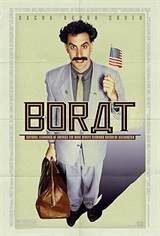
Borat
Scored from 939 calibrated IMDb reviewers. Cohort: Films · 2000s (7,847 peers).
Summary
A Kazakhstani television presenter travels across the United States to make a documentary about American culture. His crude behavior and satirical interviews with unsuspecting Americans create increasingly absurd and shocking situations that expose aspects of American society.
Borat is a 2006 comedy, mockumentary and satire film directed by Larry Charles. Sacha Baron Cohen, Ken Davitian and Pamela Anderson head the billed cast. Its certificate is R. Inside comedy it is classed as Mockumentary. It runs 1h 24m. Its country of origin is listed as the United Kingdom and the United States.
Rotten Tomatoes carries a separate audience for the same title, 35,787 of whom clear the calibration test. Its in-cohort standing is measured against the other 7,846 2000s films, not against the whole corpus. The calibrated figure is built from 939 of its IMDb reviewers. A broader pool of 992 reviewers with two or more reviews feeds the raw-average track instead.
Is Borat (2006) worth watching?
- Cohort
- Films · 2000s · 7,847 titles
- Calibrated reviewers
- 939
Cohort: Films · 2000s