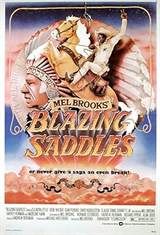
Film · 1974 · Films · 1970s
Blazing Saddles
Scored from 400 calibrated IMDb reviewers. Cohort: Films · 1970s (2,406 peers).
Summary
In the Old West, a corrupt politician schemes to drive residents off their land to clear the way for a railroad, appointing a Black sheriff named Bart to the frontier town of Rock Ridge in hopes the townspeople will revolt. Teaming up with washed-up gunslinger Jim, the Waco Kid, Bart must outwit the villains and win over the bigoted townsfolk in Mel Brooks's anarchic, fourth-wall-breaking Western satire.
Blazing Saddles is a 1974 comedy and western film. Its comedy subtype is Satire.
A second review pool sits behind it as well: 10,357 Rotten Tomatoes reviewers clear the same calibration test, and Rankquant scores them separately. 400 IMDb reviewers are calibrated for this title, and those are the ones the calibrated score reads; a separate, broader pool of 412 reviewers with at least two reviews each feeds the raw-average track. Its in-cohort standing is measured against the other 2,405 1970s films, not against the whole corpus.
Is Blazing Saddles (1974) worth watching?
- Cohort
- Films · 1970s · 2,406 titles
- Calibrated reviewers
- 400
Cohort: Films · 1970s