Film · 1999 · Films · 1990s
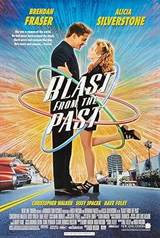
Blast from the Past
Scored from 216 calibrated IMDb reviewers. Cohort: Films · 1990s (4,082 peers).
Summary
In 1962, a paranoid inventor mistakenly believes a nuclear bomb has detonated and seals his pregnant wife in an elaborate fallout shelter for 35 years. Their son Adam, born and raised underground, finally emerges into 1990s Los Angeles to gather supplies, where his old-fashioned manners and naivete collide with modern life. He meets a jaded young woman named Eve who reluctantly helps him navigate the surface world.
Released in 1999, Blast from the Past is a comedy, drama and romance film. Inside comedy it is classed as Romcom.
Its in-cohort standing is measured against the other 4,081 1990s films, not against the whole corpus. The calibrated figure is built from 216 of its IMDb reviewers. A broader pool of 224 reviewers with two or more reviews feeds the raw-average track instead. Rotten Tomatoes carries a separate audience for the same title, 3,442 of whom clear the calibration test.
Is Blast from the Past (1999) worth watching?
- Cohort
- Films · 1990s · 4,082 titles
- Calibrated reviewers
- 216
Cohort: Films · 1990s