Film · 1999 · Films · 1990s
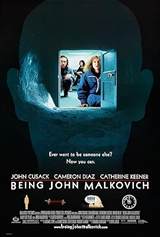
Being John Malkovich
Scored from 639 calibrated IMDb reviewers. Cohort: Films · 1990s (4,082 peers).
Summary
A puppeteer discovers a hidden portal that allows him to enter the mind of actor John Malkovich for 15 minutes at a time. When the secret portal becomes known, several people become obsessed with the surreal experience, each driven by their own desires and leading to a complex web of identity, obsession, and manipulation.
Released in 1999, Being John Malkovich is a comedy, drama and fantasy film. Its certificate is R. Its country of origin is listed as the United States. John Cusack, Cameron Diaz and Catherine Keener head the billed cast. Spike Jonze directed it. Inside comedy it is classed as Dramedy. It runs 1h 52m.
The calibrated figure is built from 639 of its IMDb reviewers. A broader pool of 661 reviewers with two or more reviews feeds the raw-average track instead. Its in-cohort standing is measured against the other 4,081 1990s films, not against the whole corpus. Rotten Tomatoes carries a separate audience for the same title, 10,745 of whom clear the calibration test.
Is Being John Malkovich (1999) worth watching?
- Cohort
- Films · 1990s · 4,082 titles
- Calibrated reviewers
- 639
Cohort: Films · 1990s