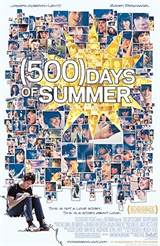
Film · 2009 · Films · 2000s
500 Days of Summer
Scored from 682 calibrated IMDb reviewers. Cohort: Films · 2000s (7,847 peers).
Summary
Tom, a greeting card writer, falls for Summer, a free-spirited woman who doesn't believe in true love. Told through non-linear vignettes across 500 days of their relationship, the film explores Tom's romantic idealism clashing with Summer's emotional unavailability, leading to heartbreak and self-discovery.
Released in 2009, 500 Days of Summer is a romance, comedy and drama film. Inside comedy it is classed as Dramedy. Its country of origin is listed as the United States. Marc Webb directed it. Its certificate is PG-13. Joseph Gordon-Levitt, Zooey Deschanel and Geoffrey Arend head the billed cast. It runs 1h 35m.
The calibrated figure is built from 682 of its IMDb reviewers. A broader pool of 707 reviewers with two or more reviews feeds the raw-average track instead. Rotten Tomatoes carries a separate audience for the same title, 13,494 of whom clear the calibration test. Its in-cohort standing is measured against the other 7,846 2000s films, not against the whole corpus.
Is 500 Days of Summer (2009) worth watching?
- Cohort
- Films · 2000s · 7,847 titles
- Calibrated reviewers
- 682
Cohort: Films · 2000s