Film · 2021 · Films · 2020s
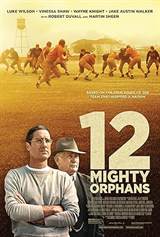
12 Mighty Orphans
Scored from 126 calibrated IMDb reviewers. Cohort: Films · 2020s (7,930 peers).
Summary
During the Great Depression, Rusty Russell, a high school football coach with a mysterious past, arrives at a Fort Worth orphanage to teach and coach its underfed, undersized boys. With only 12 players, no equipment, and no field, Rusty and his alcoholic assistant rally the orphans into a team that defies the odds and captures the imagination of Depression-era America by advancing through the Texas state football playoffs.
Released in 2021, 12 Mighty Orphans is a drama, history and sport film.
126 IMDb reviewers are calibrated for this title, and those are the ones the calibrated score reads; a separate, broader pool of 131 reviewers with at least two reviews each feeds the raw-average track. Its in-cohort standing is measured against the other 7,929 2020s films, not against the whole corpus. A second review pool sits behind it as well: 126 Rotten Tomatoes reviewers clear the same calibration test, and Rankquant scores them separately.
Is 12 Mighty Orphans (2021) worth watching?
- Cohort
- Films · 2020s · 7,930 titles
- Calibrated reviewers
- 126
Cohort: Films · 2020s