Red · Stags Leap District · United States
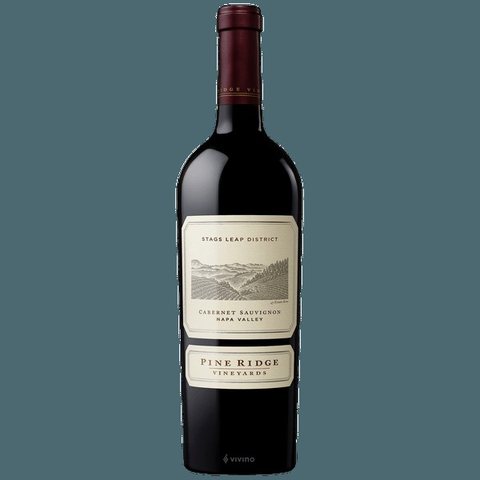
Pine Ridge Stags Leap District Cabernet Sauvignon
Scored from 817 calibrated Vivino reviewers. Cohort: Red · United States (1,156 wines).
Find this wine: view on Vivino · compare prices on Wine-Searcher
Is Stags Leap District Cabernet Sauvignon a good wine?
Tasting profile
A full-bodied Cabernet with a rich, jammy nose of black cherry, cassis, and bright red fruit layered with cedar, tobacco, smoke, and vanilla. Silky, soft tannins and decent acidity carry a long, smooth finish that pairs beautifully with steak or dark chocolate.
Synthesized from 817Vivino reviewers' tasting notes for this bottle.
What reviewers say
“Bright red fruit on the nose, with cedar and tobacco. Black cherry, cassis, smoke, and vanilla. decent acidity, silky tannins, long finish.”
From a top-rated Vivino review for this bottle.
Summary
This elegant ruby-purple wine enchants the nose with an array of rich fruit aromas of cooked Bing cherries, ripe raspberry and strawberry reduction enveloped by touches of briar, espresso spice and dried violets. The delightfully supple palate exhibits unparalleled balance, silky tannins and deep flavors of dark cherry and boysenberry alongside touches of caramel, baking spice and sugared cinnamon toast that continue long through the velvety finish.
Pine Ridge Stags Leap District Cabernet Sauvignon is an American red from Stags Leap District. At $96.00 for the lowest 750 ml listing, it belongs to the $60–120 band.
The calibrated figure is built from 817 of its Vivino reviewers. A broader pool of 849 reviewers with two or more ratings feeds the raw-average track instead. 1,155 other reds from the United States form the cohort it is ranked inside.
- Cohort
- Red · United States · 1,156 wines
- Calibrated reviewers
- none yet